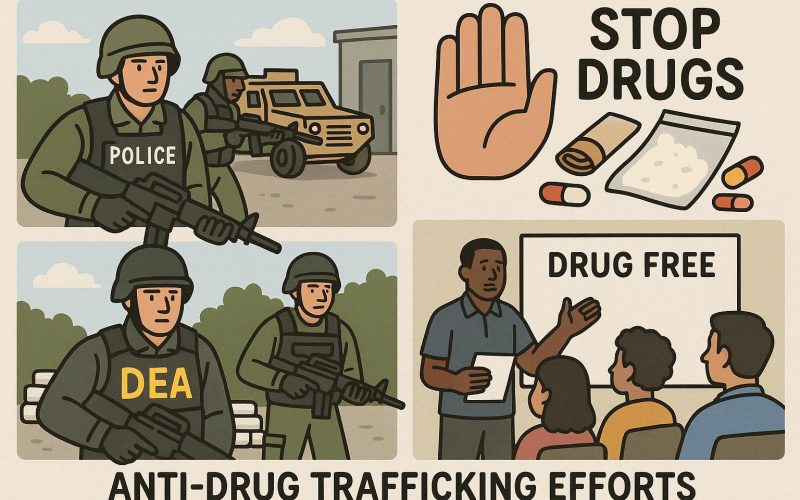
Introduction to Efforts Against Drug Trafficking and Organized Crime
Efforts to combat drug trafficking and organized crime are crucial elements of international security policies. These efforts involve a wide range of strategies and initiatives designed to address the complex challenges posed by transnational criminal organizations. This article explores various facets of the global fight against these pervasive issues, including international cooperation, legal frameworks, technological advancements, and community initiatives.
International Cooperation
A significant aspect of combating drug trafficking and organized crime is international cooperation. Countries across the globe recognize the transnational nature of these threats, which do not recognize borders, and have implemented various bilateral and multilateral agreements to counteract them. This cooperation is crucial because no single country can effectively tackle these issues alone. Coordinated efforts are necessary to dismantle the extensive networks that orchestrate such crimes across different regions.
Organizations such as the United Nations Office on Drugs and Crime (UNODC) play a critical role in facilitating global partnerships. They promote legal and practical frameworks for cooperation, offering a platform for countries to share knowledge, resources, and strategies to combat the scourge of drug trafficking and organized crime. By working together, countries can synchronize their efforts, closing gaps that criminals exploit to continue operating.
Strengthening Legal Frameworks
Efforts to strengthen legal frameworks are vital in addressing organized crime. Legal frameworks provide the necessary tools for law enforcement to effectively prosecute and dismantle criminal organizations. Many nations have enacted stricter laws and regulations that target drug trafficking networks, recognizing this as an integral part of their national security and public health strategies.
These laws often focus on improving border security, enhancing penalties for trafficking offenses, and increasing the resources available for law enforcement agencies. Effective legal frameworks also involve streamlining the judicial process to ensure that justice is served swiftly and effectively, deterring potential criminals with the likelihood of apprehension and prosecution.
Additionally, numerous countries participate in international conventions, such as the United Nations Convention against Transnational Organized Crime, to harmonize legal standards and promote comprehensive enforcement strategies. Such conventions encourage countries to adopt measures that are consistent with global standards, ensuring that loopholes in national laws do not inadvertently aid criminal activities.
Intelligence Sharing and Technology
The use of intelligence sharing and advanced technology is integral to modern anti-trafficking efforts. By fostering collaboration between international intelligence agencies, countries can better identify and neutralize trafficking networks. Sharing intelligence allows for real-time responses to criminal activities, disrupting operations before they can cause harm.
Technologies such as data analytics, surveillance systems, and drones are increasingly used to monitor and disrupt criminal activities. Data analytics can sift through vast amounts of information to identify patterns and anomalies indicative of criminal operations, while surveillance systems and drones provide real-time monitoring capabilities to watch over suspicious activities from the skies.
Furthermore, initiatives focusing on cybersecurity aim to counter the use of the internet and encrypted communications by organized crime groups. As criminal organizations have increasingly turned to digital means to organize and conduct their operations, staying ahead in cybersecurity is essential. This involves developing technologies and methods to crack encrypted communications and disrupt online networks used for drug trafficking and other criminal activities.
Addressing Root Causes
Efforts to combat drug trafficking and organized crime are also directed toward addressing the root causes that lead to such activities. Many individuals become involved in these activities out of economic necessity, making socioeconomic interventions a key component of comprehensive anti-crime strategies.
Efforts in this vein include poverty alleviation programs, education, and employment opportunities, all designed to reduce the appeal of criminal enterprises. By improving socioeconomic conditions, governments provide people with viable alternatives to illicit activities, making communities less susceptible to the lure of crime.
Initiatives also focus on strengthening social infrastructure, such as healthcare and housing, to ensure a better quality of life for potential crime entrants. Investing in these areas helps create more resilient communities that are less likely to be torn apart by the influences of organized crime.
Community Engagement and Education
Community engagement and education are crucial to the success of anti-crime initiatives. By raising awareness about the dangers and impacts of drug trafficking, societies can foster a supportive environment for law enforcement efforts and instill a sense of shared responsibility.
Educational campaigns often involve collaboration with local communities, non-governmental organizations, and other stakeholders. These campaigns are designed to promote a culture of lawfulness, encouraging citizens to report suspicious activities and be proactive in preventing crime. By equipping community members with knowledge about the signs of criminal activity, these initiatives help in creating vigilant societies that are difficult for organized crime groups to infiltrate.
Additionally, community engagement programs work to strengthen community bonds, ensuring that there is local cohesion when facing the threats posed by organized crime. Together, communities can form a united front against criminals and their destructive impacts.
Conclusion
Through a combination of international cooperation, strengthened legal frameworks, advanced technology, and community engagement, significant strides are being made in the fight against drug trafficking and organized crime. These efforts have proven that a multifaceted approach is necessary to tackle the complex issues brought forth by such criminal activities. However, these efforts require continual adaptation to the evolving tactics of criminal organizations. Ongoing commitment and collaboration among international and local entities remain essential to effectively curtailing these global threats. Nations must continue to innovate and work together to ensure a safer, more secure world free from the pervasive threats of drug trafficking and organized crime.