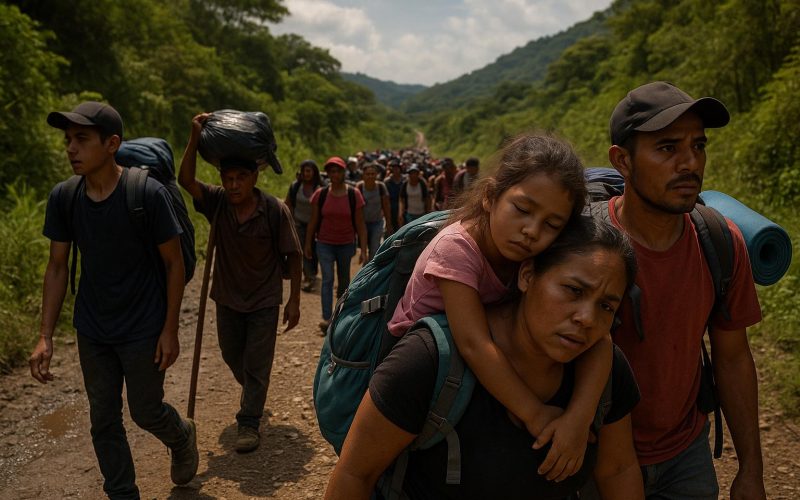
The Migration Crisis
The migration crisis has swiftly moved to the forefront as a pressing global issue, capturing the attention of international leaders, policymakers, and humanitarian organizations alike. This term broadly encompasses the mass movements of individuals, often including refugees, asylum seekers, and economic migrants, who are compelled to leave their home countries due to a myriad of reasons such as conflict, persecution, poverty, or environmental challenges. Understanding the intricacies and widespread impact of the migration crisis is crucial for formulating effective responses and solutions.
Causes of the Migration Crisis
The drivers of the migration crisis are varied and complex, often intersecting and amplifying each other in different geographical contexts.
Conflict and Persecution: In many regions, armed conflicts, coupled with political instability and ethnic persecution, emerge as primary factors prompting large-scale migration. Notably, areas such as the Middle East and parts of Africa have been hotspots of significant displacement due to ongoing wars and internal upheavals. These environments of persistent violence and instability create conditions where staying in one’s homeland becomes a perilous choice, leaving individuals with little option but to seek safety elsewhere.
Economic Factors: Economic conditions also play a pivotal role in migration decisions. People living in areas with limited job opportunities and stagnant economic growth often migrate in pursuit of better livelihoods, driven by the hope of improved employment prospects and living conditions. This economic disparity between nations acts as a significant motivator, pushing individuals to relocate to countries perceived as lands of opportunity.
Environmental Changes: In recent years, the impact of climate change and environmental degradation has increasingly contributed to population displacement. Factors such as droughts, natural disasters, and rising sea levels directly threaten food security and traditional means of livelihood, compelling affected communities to move. These environmental migrations highlight the intricate connections between ecological challenges and human movement patterns.
Global Implications
The migration crisis’s implications are far-reaching, affecting both countries of origin and those of destination, with profound social, economic, and political consequences.
Demographic Shifts: Countries that receive large numbers of migrants often undergo significant demographic transformations. The arrival of new populations can influence labor market dynamics, necessitating policy adjustments to integrate newcomers effectively. Such demographic changes can be beneficial, contributing to the workforce and addressing population decline challenges, yet they also require careful management to ensure stability.
Social and Cultural Impact: Migrants introduce diverse cultures and perspectives, potentially enriching the social fabric and cultural landscape of host countries. However, the integration process poses challenges, particularly when there is resistance to cultural adaptation on either side. If not managed adeptly, these differences can result in social tensions and conflicts between migrants and local communities.
Political Repercussions: The migration debate has become a contentious issue within political arenas across the globe. It heavily influences domestic politics, affecting electoral outcomes and shaping government policies concerning immigration, integration, and border control. Balancing national interests with humanitarian commitments remains a complex endeavor for political leaders aiming to address constituents’ concerns while adhering to international obligations.
International Responses
The international community has reacted to the migration crisis with varied strategies, yet the effectiveness of these responses remains uneven and frequently debated.
United Nations High Commissioner for Refugees (UNHCR): The UNHCR plays a fundamental role in responding to the needs of refugees worldwide. This agency is vital in providing protection, assistance, and advocating for refugee rights while working towards sustainable solutions for those driven from their homes.
International Organization for Migration (IOM): The IOM is active in promoting safe, humane, and orderly migration. It offers services and consultancy to governments, striving to enhance migration management and reduce the vulnerabilities faced by migrating individuals.
Regional Agreements: Several regional cooperation frameworks aim to manage migration flows more effectively. For instance, the European Union has developed various policies and agreements to address migration challenges collaboratively. Nonetheless, these initiatives often encounter hurdles due to differing national interests and political challenges, demonstrating the complex nature of achieving consensus in migration governance.
Future Perspectives
The migration crisis is anticipated to remain a steadfast challenge on the global stage. Addressing this issue necessitates comprehensive, globally coordinated strategies that tackle its root causes. Resolving underlying conflicts, promoting sustainable development, and strengthening legal migration channels can potentially alleviate the pressures contributing to mass displacements. As countries navigate these challenges, balancing humanitarian priorities with political and security concerns will remain an intricate task requiring ongoing cooperation, dialogue, and innovation in policy-making frameworks. Such efforts are essential to ensure humane and equitable responses to one of humanity’s most enduring challenges.