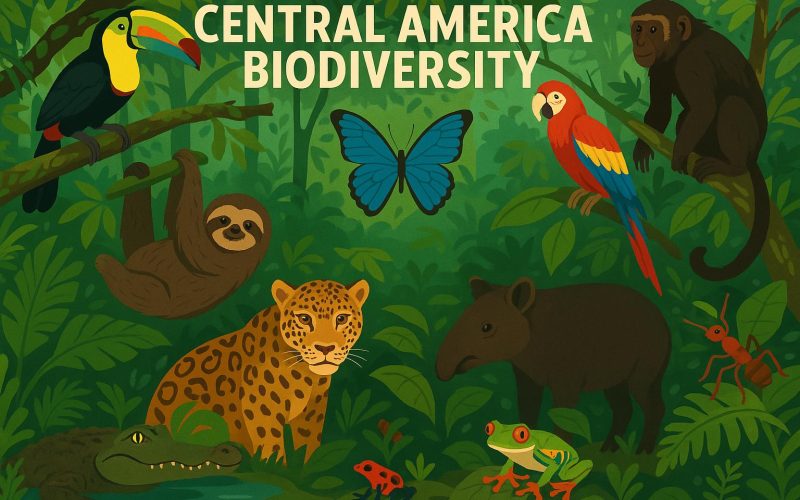
Central America’s Rich Biodiversity
Central America serves as a vital bridge between the continents of North and South America, and it plays an essential role in the global ecosystem by harboring a significant portion of the world’s biodiversity. Consisting of seven countries—Belize, Costa Rica, El Salvador, Guatemala, Honduras, Nicaragua, and Panama—this region integrates a breathtaking array of ecosystems. These diverse environments are attributed to the area’s tropical climates, mountainous terrains, extensive rainforests, and expansive coastal zones.
Varied Ecosystems
Central America’s unique topography and climate have given rise to various ecosystems, each supporting a diverse spectrum of life. Among these, rainforests, cloud forests, dry forests, mangroves, and coral reefs stand out prominently. The rainforests alone are bustling hubs of biodiversity, housing organisms ranging from towering trees that climb over 50 meters high to ground-dwelling plants and countless animal species. This variety makes these ecosystems essential habitats for both flora and fauna.
Rainforests and Cloud Forests
The rainforests of Central America are characterized by their dense canopy layers, which create a unique microhabitat that supports extensive biodiversity. These ecosystems are home to myriad species, including many kinds of birds, mammals, reptiles, and insects. A notable resident of these habitats is the Resplendent Quetzal, an iconic and colorful bird that epitomizes the ecological wealth of the region. Venturing higher into the mountainous terrain, cloud forests appear. Known for their perpetual cloud cover, these forests provide a niche environment for numerous specially adapted species.
Endemic Species
The biodiversity of Central America is further enriched by its high number of endemic species, unique to this region and found nowhere else worldwide. The endemic nature of much of this flora and fauna can be directly linked to Central America’s diverse geography and microclimates. This isolation and unique set of conditions allow species to evolve independently, cultivating a high level of endemism. The result is a dynamic ecosystem with a plethora of rare and specialized organisms.
Coral Reefs and Marine Life
Beyond its terrestrial environments, Central America extends its biodiversity into the oceans, particularly through the vibrant and diverse marine ecosystems. The Mesoamerican Barrier Reef, which is the second-largest of its kind globally, borders the Caribbean coast. This magnificent reef is a hotspot for marine biodiversity, providing habitat to a multitude of species including numerous varieties of fish, sea turtles, and other marine organisms. The reef’s health is paramount for the survival of these species, underscoring its ecological significance on a global scale.
Conservation Efforts
While Central America’s biodiversity is immensely rich, it is not without significant threats from anthropogenic activities and climate change. Issues such as deforestation, habitat destruction, and changing weather patterns pose serious challenges to the region’s ecosystems. In response, numerous conservation strategies are actively being implemented to protect and sustain these indispensable natural resources. For instance, a variety of organizations, including those focusing on the protection of the Mesoamerican Reef, are dedicated to conservation. Moreover, local governments have taken steps by designating areas as national parks and protected reserves, aiming to shelter these ecosystems from further degradation.
Central America’s contribution to global biodiversity is irreplaceable, not only because it provides crucial habitats for an untold number of species but also due to its role in maintaining overall ecological balance. Conservation measures are critical to ensuring the sustainability of this rich biodiversity, allowing it to persist for future generations. The responsibility rests on coordinated global and local efforts to preserve this invaluable and delicate ecological web. In this pursuit, every stakeholder—ranging from governments and NGOs to local communities—must play a role in safeguarding the environmental integrity of this biodiverse region. While the challenges are formidable, the opportunity to maintain and protect Central America’s rich natural heritage is an endeavor of utmost significance.