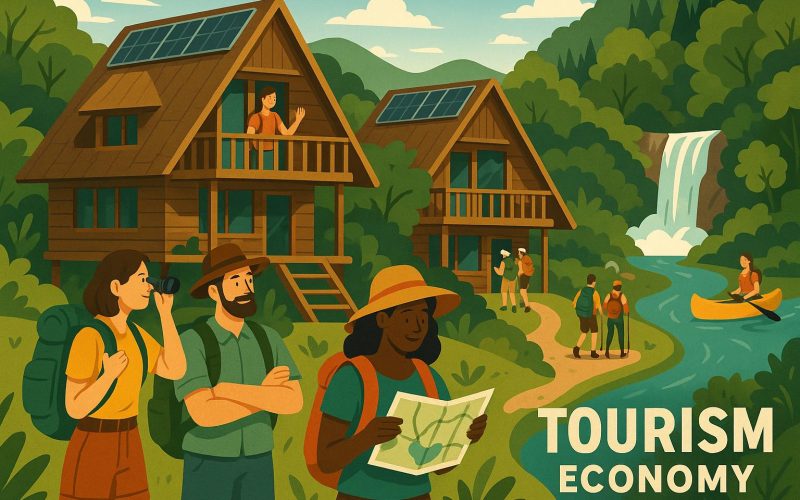
The Role of Tourism in Economic Development
The tourism industry stands as a pivotal force in the economic advancement of various nations across the globe. Beyond merely generating revenue, this sector fosters cultural dialogue and global interconnectivity. In today’s interconnected world, the multifaceted impacts of tourism are evident in numerous spheres, encompassing economic, cultural, and environmental dimensions.
Contribution to GDP and Employment
The role of tourism in boosting a country’s Gross Domestic Product (GDP) cannot be overstated. This sector generates income from diverse streams including accommodations, transportation, eateries, and entertainment hubs. Tourists spend money on lodging, local cuisines, travel services, and recreational activities, all of which significantly contribute to the GDP.
Furthermore, tourism acts as a catalyst for job creation, offering employment across various skill levels. From entry-level positions in service sectors such as hotels and restaurants to specialized jobs in tour management and hospitality, tourism provides diverse employment opportunities. This industry supports millions of jobs worldwide, contributing to economic stability.
Recognizing its potential, many nations have incorporated tourism into their economic growth strategies. According to insights from the World Travel & Tourism Council (WTTC), the travel and tourism sector constitutes a substantial fraction of the global GDP. In particular, small island developing states and emerging market economies frequently rely on tourism as a primary income source, fostering economic resilience and diversification.
Investment in Infrastructure
Demand surges in tourism typically prompt heightened investments in infrastructure. Governments and private investors channel resources into constructing modern airports, upgrading public transportation networks, and developing compelling tourist sites. Notably, these infrastructural advancements do not solely benefit tourists. Local populations gain from improved transportation options, better facilities, and enriched quality of life.
Enhanced infrastructure bolsters a nation’s allure as a tourist hotspot, thereby enticing more visitors and amplifying revenue streams. Several countries that diligently directed investments into tourism-supportive infrastructure have witnessed substantial economic rewards, highlighting a strategic intersection between economic planning and tourism growth.
Cultural Exchange and Preservation
Tourism serves as a conduit for cultural exchange, facilitating unique interactions between travelers and resident communities. Tourists immerse themselves in new cultural contexts, experiencing local traditions, cuisines, and lifestyles. This exposure fosters a global appreciation and understanding of cultural diversity.
Moreover, the influx of tourists often motivates communities to preserve their cultural heritage. Tourism revenues, for instance through entry fees and allied activities, fund the conservation of historical sites and environmentally significant landscapes. Communities are hence incentivized to maintain and showcase their cultural identities, assisting in both cultural preservation and economic benefit.
Challenges and Sustainability
Notwithstanding its contributions, tourism brings with it an array of challenges that demand prudent management. Nations overly reliant on tourism risk susceptibility to global disruptions like pandemics or economic recessions. Additionally, unchecked tourism can result in environmental strain, resource overexploitation, and cultural assimilation or loss.
To address these complexities, a growing number of countries are advocating for sustainable tourism practices. These initiatives aim to balance growth with ecological stewardship and cultural integrity. Policymakers are thus increasingly emphasizing eco-friendly tourism models, seeking not only to attract tourists but also to preserve ecological and cultural assets. Visitors are encouraged to adopt minimal-impact practices, ensuring that tourism remains a viable and respectful economic driver.
In summary, tourism indisputably serves as a major economic engine, yielding diverse benefits. However, its associated challenges must be met with comprehensive strategies that emphasize sustainability. By strategically investing in infrastructure and prioritizing sustainable initiatives, nations can maximize the positive economic impacts of tourism while safeguarding their cultural and environmental heritage. For additional insights into worldwide tourism dynamics, you may explore resources provided by the UN World Tourism Organization.