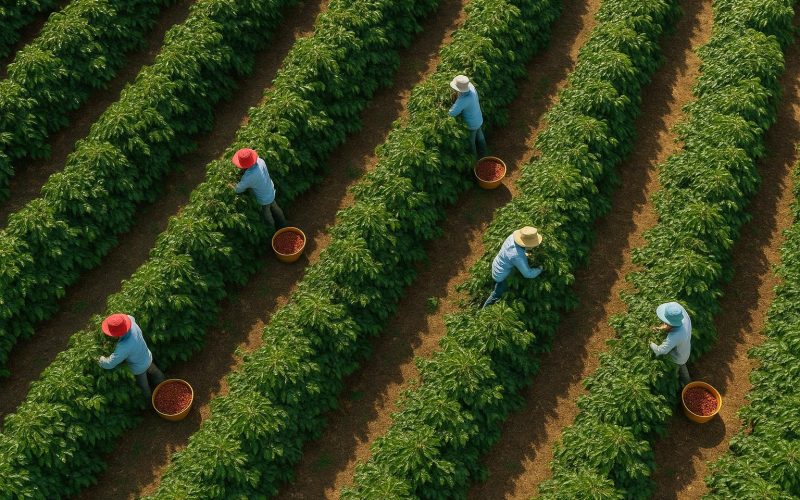
The Importance of the Coffee Industry in Central America
Central America’s coffee industry is a cornerstone of its economy, influencing the lives of countless individuals and contributing significantly to the region’s cultural and environmental landscape. This geographical area, which includes countries like Guatemala, Honduras, El Salvador, Nicaragua, and Costa Rica, is internationally recognized for its production of high-quality Arabica coffee. The unique and favorable climate, coupled with fertile volcanic soil, provides an optimal setting for the cultivation of these coffee beans.
Economic Impact
The role of coffee production in Central America’s economy cannot be overstated. It serves as a major economic engine, providing jobs to a wide range of individuals from smallholder farmers to those employed in various sectors such as processing and exporting. For numerous rural communities, cultivating coffee is the main livelihood, underpinning household incomes and sustaining local economies. Coffee exports also make a significant contribution to the national gross domestic products (GDP) of these countries, underlining the industry’s importance to overall economic stability and growth. The ripple effect of this industry impacts numerous related sectors, from logistics to retail, further embedding its significance within the regional economic fabric.
Environmental Considerations
Coffee cultivation in Central America comes with a complex mix of environmental benefits and challenges. On one hand, traditional coffee farming methods that involve growing coffee under the canopy of shade trees can enhance biodiversity, improve soil health, and conserve water resources. This approach stands in contrast to more intensive farming methods that can lead to deforestation and habitat destruction. The loss of forests can have a cascading effect, leading to soil erosion and decreased water quality. Additionally, the overuse of pesticides and fertilizers poses environmental and health risks.
To counter these challenges, the region has seen numerous initiatives aimed at promoting environmentally sustainable farming practices. These include organic production and the incorporation of agroforestry techniques, which involve integrating trees and shrubs into agricultural landscapes. Such methods not only help in maintaining ecological balance but also offer farmers financial stability through diversified income sources.
Challenges Faced by the Coffee Industry
Despite its significant contributions, the coffee industry in Central America faces multiple challenges. Fluctuating global coffee prices, exacerbated by market dynamics and changing consumer preferences, create economic instability for producers. Furthermore, the industry is increasingly threatened by climate change, which manifests in altered weather patterns and increased vulnerability to pests like the coffee leaf rust fungus. These factors can drastically affect coffee yield and quality, endangering the economic welfare of communities that heavily depend on coffee cultivation.
Addressing these challenges requires a cooperative regional approach as well as investments in research and development. Efforts are focused on breeding disease-resistant coffee varieties, improving pest control measures, and optimizing irrigation and crop management techniques to adapt to changing climatic conditions.
Climate Change Impacts
The repercussions of climate change pose a significant threat to coffee producers in Central America. Alterations in temperature and rainfall patterns can disrupt the delicate balance of ideal growing conditions necessary for Arabica coffee, which is suited to cooler climates typically found at higher altitudes. In response, producers are exploring various adaptation strategies. For instance, some are shifting coffee cultivation to higher elevations where the climate remains suitable, while others are diversifying their crops to include varieties more tolerant of warmer temperatures.
In addition to changing cultivation practices, a focus on improving soil health and adopting water conservation techniques is gaining traction. These methods not only help in coping with the immediate effects of climate change but also contribute to long-term ecological sustainability.
Improving Sustainability
Central America’s coffee industry is increasingly prioritizing sustainability. Various organizations and cooperatives are collaborating with local farmers to implement best practices across the coffee production chain. This includes endorsing fair trade practices that aim to ensure fair wages and better working conditions for laborers. Moreover, there is a concerted effort to educate farmers on sustainable farming techniques, which not only improve yield and quality but also have less negative impact on the environment.
Initiatives promoting sustainable coffee production often focus on smallholder farmers, who form the backbone of the industry. By providing access to resources and training, these programs seek to empower farmers, enhance their economic resilience, and encourage the adoption of practices that are environmentally benign.
Conclusion
The coffee industry in Central America is deeply integrated into the region’s economic and cultural framework. While facing a number of challenges, continued efforts to adopt sustainable agricultural practices and adapt to evolving environmental conditions present promising opportunities for the future. The collaboration between governments, non-governmental organizations (NGOs), and the private sector is crucial in fostering the resilience and prosperity of Central America’s coffee industry. To gain further insight into efforts supporting sustainable coffee production, one may explore the resources provided by theSustainable Coffee Challenge.